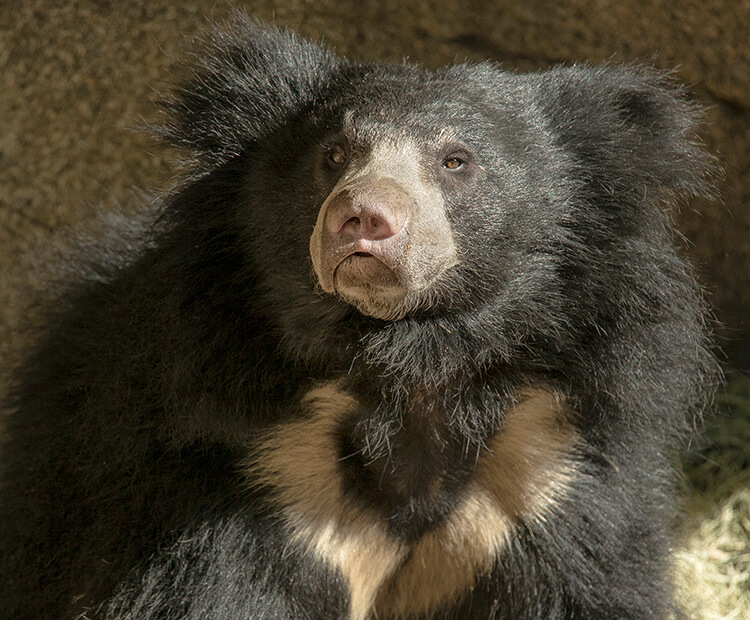
I'm sure, the first thing you think of when you hear "sloth bear" is sloths. Unfortunately, they are not related at all! This bear got its name due to a zoologist, George Shaw, who mistakenly thought the bear was related to sloths because of their sloth-like features. Like many people in the morning, Sloth bears have a bit of a unkempt appearance with shaggy black fur and a distinctive white patch of fur in shape of "V" demonstrating their uniqueness. They have a long tongue and sharp claws that allow them to climb trees. These bears can grow 5 to 6 feet long and weigh around 200 to 300 pounds on average. Sloth Bear is unique in that it has a long, mobile snout and lacks two upper incisor teeth, creating a gap that helps it suck up insects. They also possess long, sickle-shaped claws that are among the longest of any bear species, which they use for tearing into termite mounds and finding food.
Sloth bears can be found in Sri Lanka, Bhutan, India and southern Nepal. They adapt well to all kinds of environments! Surprisingly, they are one of the few bears that don't hibernate. You can find them sleeping in caves or near available rivers. Sloth bears' main diet consists of fruits, nectar, and insects such as ants or termites. Although when resources are scare, they will eat carrion known as the rotting flesh of dead animals. You can also find them climbing trees to knock down honey combs in search for honey! Beyond their role as insect controllers, they are also significant seed dispersers, aiding in the regeneration of the forests they inhabit.
Sloth bears are known for being solitary and generally nocturnal. Although they are shy, they can get aggressive and stand on their hind legs when threatened to demonstrate superiority against potential threats such as tiger or humans. Sloth bears are quite vocal, making various sounds when foraging, eating or use against predators. However their family life differs, as the mothers are quite protective over their cubs. They use their long fur coats to carry their youngs on their backs while forging for food. This provides the cubs with protection from any predators. Cubs typically remain dependent on their mother for approximately two to three years, learning crucial survival skills like locating termite mounds and foraging for fruit.
According to the IUCN Red List, sloth bears are currently listed as vulnerable due to hunters killing them for their gall bladders for usage properties in Asian medicine and killed by famers because of crop damage. Did you know that sloth bears used to be natives to Bangladesh? Although they were completely wiped out due to habitat loss. The combination of poaching for traditional medicine, retaliatory killings by humans due to crop raiding, and severe habitat fragmentation has resulted in a continued decline across much of their range. Effective conservation strategies require securing wildlife corridors, reducing human-bear conflict through community education, and strictly enforcing anti-poaching laws.