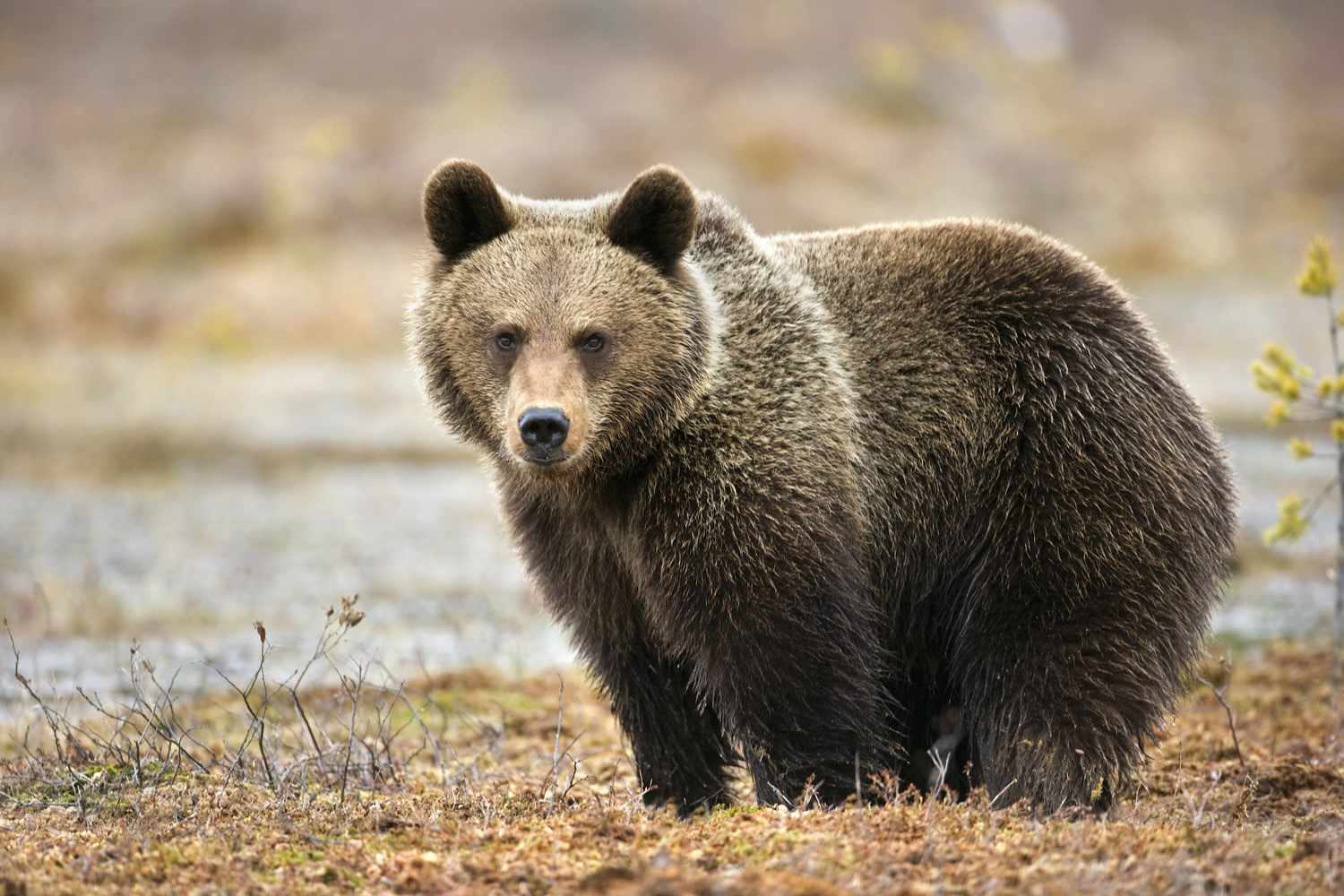
Brown Bears also known as Grizzly Bears or Kodiak Bears are found throughout North America, Europe, and Asia. Brown bears are one of the largest carnivoran species on Earth and can weigh up to 1,500 pounds. They have a distinct hump on their shoulders and long claws that are used for digging. This shoulder hump is a mass of muscle used to power their forelimbs for digging up roots and prey, and is a key distinguishing feature from other bear species like the American Black Bear. Their fur color varies widely, ranging from blonde or light brown to a dark, almost black hue, and the term "grizzly" often refers to the North American subspecies, Ursus arctos horribilis. As opportunistic omnivores, their diet is incredibly varied, consisting of berries, roots, fish, insects, and large mammals.
Brown Bears live in a variety of habitats, including tundra, alpine meadows, mountains and dense forests. They are hyper-omnivores, so they consume a wider variety of foods than any other bear, allowing them to adapt to almost any environment! These bears enjoy eating roots, berries, insects, and small mammals. These bears are also known to fish for salmon during spawning season. They are opportunistic predators targeting small mammals, ground squirrels, and sometimes larger targets like moose or elk calves. Their highly varied diet requires them to cover large home ranges, and their search for food is what drives their movements and interactions across different ecosystems. Furthermore, this wide-ranging omnivorous diet is the reason why Brown Bears enter a state of deep winter sleep, or hibernation, during times when food is scarce.
Brown Bears are generally solitary animals, but sometimes gather in groups at food sources like salmon streams. Males require huge home ranges and are highly territorial. They communicate their presence through scent marking and tree-biting. In their family life, mothers are protective over their cubs and the females give birth to one to three cubs during the winter. The cubs remain with their mothers for 2.5 to 4.5 years to ensure they learn the complex skills need for survival. This long maternal investment is crucial for cub survival, and the mother will fiercely defend her offspring from danger, including adult males who may pose a threat. Brown bears are also known to be one of the longest-lived bear species, with individuals in the wild sometimes reaching ages exceeding 30 years.
Brown Bears are currently listed as least concern by the IUCN Red List due to large populations in Russia, Canada, and Alaska. Although, they are still vulnerable and protected in parts of the United States and Europe due to threats of habitat loss and human-bear conflict. Conservation efforts from Greater Yellowstone Ecosystem (GYE) have helped this species to have a significant population recovery. Despite the overall global status, several distinct populations, such as the grizzly bear in the contiguous United States, are protected under national laws like the Endangered Species Act. Major threats include fragmentation of habitat, which limits gene flow, and mortality resulting from conflicts with livestock ranchers and hunters. Successful conservation often involves community education, management of human food sources, and securing wildlife corridors to allow bears to move between isolated habitat patches.