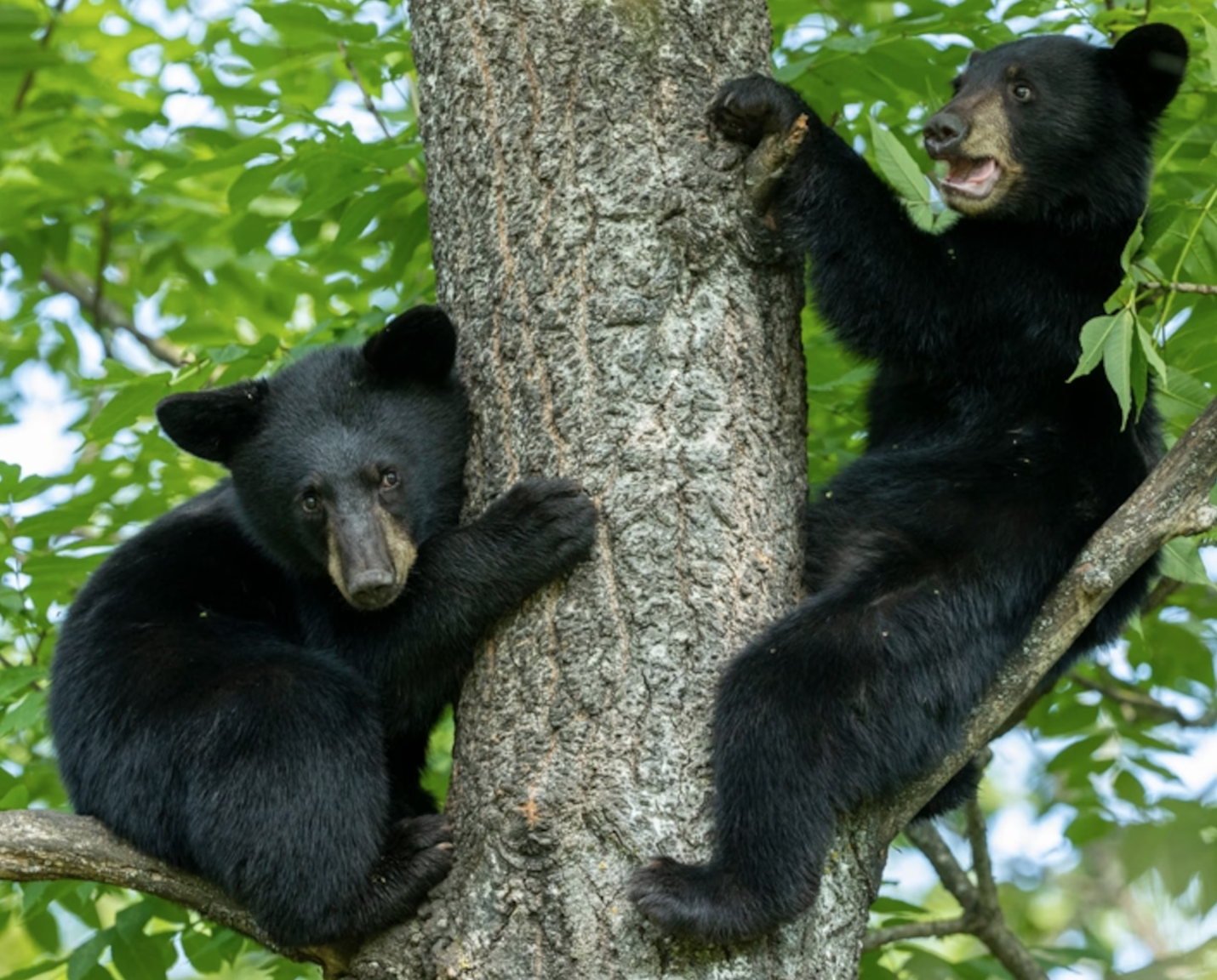
The American Black Bear is the smallest and most common bear species in North America. Despite their name, they can be found in various colors depending on their location. In the east, their fur is usually black, while in the west, they can be found brown or cinnamon color. They are typically 125–500 pounds and have large, pointed ears that are more prominent than other bear species! These bears have more shorter curved claws that make them good tree climbers. This is significant because climbing is their main defense tactic that allows them to escape from predators. Another key physical feature is their lack of a prominent shoulder hump, distinguishing them from the larger Brown Bear (Grizzly). Black Bears also have a straighter facial profile and less dished face compared to the Brown Bear.
Black Bears are very adaptable in a variety of habitats, including forested areas, mountains, and swamps across North America. They thrive in these environments with the use of their foraging skills and strong sense of smell to find food. They are omnivorous and have a varied diet consisting of berries, fruit, nuts, insects and plants. Black bears are also opportunistic and often forage on human food sources (garbage, bird feeders, pet food), leading to frequent human encounters. They are excellent climbers, black bears often climb trees to feed on hard-to-reach nuts and fruits or to strip bark from trees in the spring to get at the nutritious sap layer. This adaptability and willingness to exploit human food sources is what allows them to maintain the largest population of all bear species in North America.
Black Bears are more on the shy side with bears and are most active during the early morning and late evening. Black Bears can become aggressive with humans when it comes to food sources like garbage or protecting their cubs. Black bears enter a state of winter dormancy known as "torpor", which is less deep than true hibernation. This allows them to lower their metabolism, heart rate, and body temperature, but still be easily awakened. In their family life, their cubs are born in their den during January or February, while the mother is still in torpor. These cubs spend their first years learning foraging skills, identifying safe food sources, and understanding territory from their mother.
The American Black Bear is currently listed as a species of Least Concern by the IUCN Red List. This species is most populous compared to all the other bear species. With an estimated population of 600,000 throughout North America. However they still do face threats from habitat loss and trophy hunting.Their population success is largely due to their high reproductive rate, generalist diet, and ability to adapt to fragmented habitats, provided they have access to cover and food. Despite their secure global status, their high frequency of encounters with humans, especially when seeking out garbage or pet food, results in many bears being euthanized due to conflict. Effective conservation management, therefore, heavily relies on educating the public on secure food storage and managing population control in localized areas to minimize human-bear conflict.